
In this episode of Cartus Mobility Matters, we turn the spotlight on Vietnam, a new assignment hotspot and one of the top five challenging locations according to Cartus’ Global Talent Mobility Survey 2024.
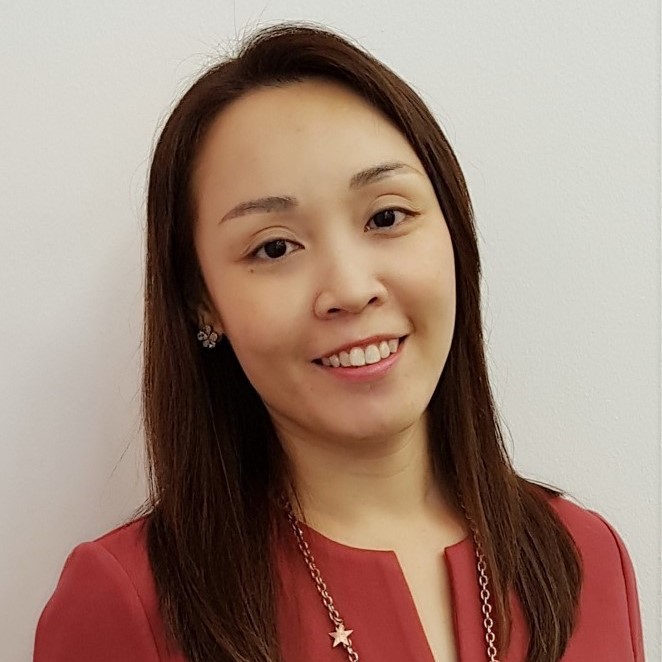
Hear from our Global Talent Mobility experts, Leigh Ng, Director, and Nancy Zhang, Manager, on their first-hand experience in navigating the various obstacles to ensure a smooth relocating experience for both the client and employees.
If you enjoyed this episode of Mobility Matters, be sure to learn more at cartus.com/podcast.
Leigh: Hello! Welcome to Mobility Matters, Cartus’ official podcast.
Today, we will explore the intricacies of employee relocations into a new relocation hotspot, Vietnam. I’m your host. Leigh Ng, Director, Global Talent Mobility. Together with me, I’m excited to have Nancy Zhang, Manager, Global Talent Mobility, Nancy joined Cartus in 2008 in Cartus’ Hong Kong office, relocated to Singapore in 2009 with her pet dog. She’s been living in Singapore since then and considers Singapore as her second home during her 15 year tenure with Cartus, she’s held various positions and has served on some of Cartus’ most important accounts in the financial services, technology, and FMCG sectors. Nancy’s dedication to exemplary service and creative thinking are highly recognized and respected by her clients, Nancy has also played an active role in the implementation of new locations for her current clients. Looking back, Nancy, you and I have been working together for over 15 years since you relocated to Singapore. Nancy has first-hand experience of relocation that she can relate to. But the difference might just be Singapore is more regulated than the destination we are discussing today. It is really nice to be co-hosting this podcast with you, Nancy.
Nancy: Thank you so much, Leigh, for the great introduction, and I’m super excited to be here today.
Leigh: Thank you. Well, early this year, we launched the Cartus Global Talent Mobility Survey 2024, titled – The Great Balancing Act, Optimizing the Employee Experience while Controlling Costs. It provided great insights driven by responses from 138 professionals across the industry. The survey covered topics including mobility, volume and activity locations, key mobility priorities and challenges, DEI, and more. But based on the survey data, half of the top ten challenging relocation destinations are situated in Asia, including China, India, Singapore, Australia and Vietnam. While Vietnam emerges as a standout, capturing 43% of respondents who have relocated employees there in the past two years, this country, known for its rich culture and flourishing opportunities, has become sort of the spot for businesses expanding globally.
Well, despite Vietnam’s appeal, organizations do encounter substantial hurdles in navigating immigration, safety concerns, and compliance standards now. Nancy, I know this survey is close to heart because you spoke at a recent Human Resources Online’s Talent Mobility event held here in Singapore, where you shared some highlights from the survey findings, as well as your own experience in relocating assignees to Vietnam in your course of work. Now, you’re also looking after one of our technology clients who’s looking to expand their footprint in Asia with Vietnam. So, let’s get started on some of the challenges and best practices for moving assignees into Vietnam, starting with the legal side of things. When relocating employees to Vietnam, what should organizations keep in mind when it comes to streamlining work permit sponsorship?
Nancy: Thank you, Leigh, for the great question. First of all, the organization need to verify their presence as a relevant entity in Vietnam to avoid extra corporate taxes and also legal compliance. And immigration specialist can definitely help the organization to understand and comply with Vietnamese labour laws, immigration requirements and other regulations, which is super essential for smooth transition. Most importantly, engaging stakeholders, relevant stakeholders, at early stage is really the key here.
Leigh: Well, yes, when it comes to relocation, compliance is non-negotiable. We always advise our clients that all checks must be dutifully carried out and obligations fulfilled before embarking on the logistics of a relocation. You mentioned engaging stakeholders, and I cannot agree more, for your technology clients, first relocation to Vietnam, what did that look like, and how were roles and responsibilities assigned.
Nancy: When I think back for this specific client engagement, actually, Cartus and immigration vendor, we drove the entire process, which was very challenging, because there was no clear allocation of the roles and the responsibilities. Fortunately, Cartus and this immigration vendor, we worked with a long time for other client engagement, so we sort of have a mutual understanding about how we handle unknown situation and navigate through the uncertainties.
That’s why we quickly formed a small project team to get a ball rolling. Once the project team was formed, we started discussion and the paperwork to getting the necessary visa for the employee and the family. Due to the limited information the client has for Vietnam, their global mobility contact actually did an initial assessment with (the) immigration vendor just to understand the feasibility to send some employees from overseas to Vietnam. Cartus and the immigration vendor, we were only given one month, which is until 31st of December 2023, to get all the paperwork submitted so that the candidate can be exempted from something called a labor market test, which went effective in January 1st, 2024. Juust to give you some context, this new labor market test is very similar to Singapore’s so called fair consideration framework. In a way, the Government is trying to making sure the companies provide opportunities to the locals instead of just sending or hiring people from overseas. Because last year, nobody knows how the measurement is going to look like, hence, we were only given a very short time, which is one month to get everything submitted so that we don’t, you know, add additional timeline to the entire process.
Leigh: Wow! That sounds like a real race for time. So, what other roadblocks that you hit? And how did you manage to turn those around?
Nancy: That goes without saying. And actually, the journey wasn’t smooth at all. It’s very bumpy, in my opinion. First of all, the initial assessment was based on sending an employee from overseas to Ho Chi Minh City, but after our consultant talked to the employee, it turned out he’s not going to Ho Chi Minh, he’s going to Hanoi, which I know is another city in Vietnam. But again, the entire documentation required was very different. So, our immigration vendor has to do another round of, you know, assessment to get the relevant documentation, which added another two to three weeks on top of everything else they previously anticipated. And second of all, the documentation preparation is super tedious.
Not sure if the audience is aware, Vietnam is still very different from other APAC location like Hong Kong, Singapore, Australia, Japan. While online submission is a norm already, In Vietnam, everything is in hardcopy. So, the immigration vendor has to print out everything in hard copy, and then they have to coordinate with a courier to send it to the relevant person in the client’s office to sign with a wet signature. All this needs a very meticulous planning, which is very challenging, given the one month we had. And also, in this case, when the only authorized personnel in Vietnam who could sign this paperwork is out of office for one and a half weeks during the Christmas time, that was really hard to get the ball rolling. But luckily, the immigration vendor, they tried different ways, and we got very lucky at the end. I think one of the very key documents was accepted by the Vietnam immigration bureau with the e-signature, and also the translation and notarization for all the documentation, such as marriage certificate, education certificate, the children’s birth certificate, all took some time. For this case, it took about two to three months for everything to get completed. The entire process took, I don’t want to scare you, Leigh, it did take nine months. So, we received authorization on 1st of November 2023, and only until this month, August 2024, the employee and entire family got all the relevant paperwork for them to get on a plane to go to Vietnam.
Leigh: Wow! I was holding my breath to see what else was coming. What a great outcome! It’s not easy to get such a big group together, so important to have a project lead to do the progress tracking and communications. So, what do you advise when it comes to timeline? Something very critical as well, right?
Nancy: Yes, timeline is really critical for any moves into any unknown countries. So, for clients who plan to send their employees to Vietnam, I would strongly suggest you plan this ahead of time, at least six to nine months, definitely ahead of your move.
First of all, you should form a project team, appoint a project manager who has the oversight of the entire project. The most suitable candidate, in my point of view, would be the global mobility contact, because they know the business side of things, also, they are the SME for relocation, the project team would consist of global mobility contact, HRBP, talent acquisition, hiring manager, RMC, like Cartus, and also our immigration vendor. Just like any project, the project manager needs to have a kick-off meeting to outline the requirements, the timeline, then allocate the tasks to the respective stakeholders. The project team should also meet regularly at the beginning for the updates, so that everyone is on the same page. At this point of time. Immigration, vendor and RMC role are very, very important, because they are the one to point out the challenges and any red flags, and they can offer alternatives if solution A doesn’t work, let’s move on to Solution B and solution C. And also, they can set the right expectation if they do see a delay of getting everything done. Even after a few successful cases, my recommendation would be, to still keep the project team. They still need to have regular meetings, nay not be as much as before, but they can still review to speak, about what went well, what did not go well, and what we have learned from it, and how to work together to have a better workflow moving forward.
Leigh: Well, we could really make a checklist out of this. From what you shared, six to nine months sounds like an awfully long time to prepare ahead when it comes to today’s relocation landscape where everything goes fast, but nevertheless, that is what makes it especially crucial to engage the right people from the time our clients know they are relocating someone into Vietnam or any new location for that matter, and to understand the prerequisites for a successful relocation. What is a key takeaway we can learn from this case? I know there must be many, but what is one key takeaway you can share?
Nancy: You know, it’s indeed a very long time, right? When we have any clients move people to Vietnam, I keep on reiterating to them the importance of patience. Be patient. Be patient. Be patient. Like I said, there’s so many things I’ve learned from this, but if I have to name one, then the key takeaway for me would be to have the buy-in from the global mobility contact ahead of time, so they understand the importance of planning in advance. By doing so, they can also get buy-in from their internal stakeholders, like senior management, hiring managers, and everyone is on the same page. They can discuss this as a whole team, rather than work in silo, and also flag this type of request to RMC like Cartus ahead of time so that we can provide insights, given our experience as the industry leader. And just to share more, Leigh, you know our consulting team and our global talent management team, we have assisted clients in different industries for the past many years, with similar requests, it can be either group moves or moves into a very challenging and unknown location. We have our underground experts, SMEs, such as immigration vendor, DSPs, moving services, local tenancy management teams to provide valuable insights to clients.
Leigh: That sounds great and very reassuring, and besides the legal and compliance considerations, shall we look at other essential services that an employee might need, such as language and intercultural training. So, I truly feel that equipping employees with cultural knowledge and language proficiency is key for swift adaptation and productivity, especially when the employee is embarking on an assignment in a very different culture from their own. So, Nancy, for this tech client, did they provide any intercultural training and language lessons?
Nancy: That’s a very interesting question. Lee, the client, was resistant to the idea initially, but we managed to get a buy-in at the end.
Leigh: That’s very positive, a great win, and we can all agree that relocation doesn’t end once the boxes are unpacked. It’s an ongoing adjustment process. So, tell me more here.
Nancy: When our global management team were made aware of this upcoming relocation cases into Vietnam, they quickly set up a call with the client who has to the oversight of the entire mobility program, and they started asking questions. So, they had a review to see what are the benefits offered to this employee and the family. When our team noticed that the client only put the language lessons and the intercultural training program as a flexible benefit instead of core benefit, then they started asking propping questions, like we normally do, why is that, right? And the understanding was around the cost. Challenging? Of course, not surprising at all in this current environment. And we didn’t just stop there. What we did is, we went back to the internal team to see if anything can be done so that we can still offer this essential benefit to the client, but do not cost them a fortune.
After some internal discussion, I’m glad to say that we were able to offer a workaround, while not compromising on the benefit and the quality of the program. We were able to substitute the usual face-to-face training with a virtual learning program. In a nutshell, is much more cost effective to the client while we were still able to provide flexibility to the employee and family. So, our global management team shared the analysis of the two types of programs, the virtual one, versus the face-to-face, the price difference, and also the share some benchmarking data from other clients. Because we always want to ask, how about other people? What have you done for other clients? So, we collected all the sentiments from other clients, who also sent the employee to Vietnam, and eventually the client contact was convinced, and she said yes to this idea.
Leigh: Well, that’s wonderful sharing. Thank you, Nancy, I have to say it’s really key to understand what the client needs and to be persistent in transforming that into a tangible service that can benefit the employee. We have seen so many benefits for our clients who provided intercultural training as a core benefit to their relocating employees. While upfront expenses may seem significant, the value add for skilled, engaged employees can far outweigh this cost over time, just like you guys picked up, there’s no denying that familiarizing employees with local culture will facilitate deeper understanding and integration within local communities. Moreover, comprehensive intercultural training will empower employees to navigate diverse communication styles, assist them to interpret nonverbal cues in various social and professional settings, and prevent any potential cultural misunderstandings.
It’s worth noting that culturally adept organizations are often highly regarded within local communities, a goal many of our clients aspire to achieve, and besides cultural awareness, many of our clients are truly prioritizing diversity and inclusion in their policies today, clients who have introduced the inclusive mobility solution workshops for the selection and receiving managers gave positive reviews as it supports them in their DEI goals. We were delighted to hear from one of our clients and the recipients of the program speak highly about the value of these workshops and how they were able to implement actions with the increased awareness. I particularly liked one feedback that said every small action makes a big difference. And Nancy, besides intercultural training for moves into Vietnam, you do work with our on-ground SME, the destination service provider, to provide support and information. Is that correct?
Nancy: Yes, but only just like any moves going to a country while the client hasn’t had much movement. In addition to immigration compliance consideration and also the intercultural language piece we just mentioned, we will always engage our supply chain team, our internal team, and also our underground partners, which is the DSP, to check on all the information so that we can provide a more holistic and comprehensive view to the client.
The information we provide consists of housing and schooling information, transportation, banking and overseas wire, insurance, including medical, and also the daily living. Similar to other parts of APAC, it is common to normally provide car and the driver to support employee’s daily commute. So therefore, we would suggest to the clients to provide a transportation allowance that is sufficient enough to cover a car and the driver. And for housing, it’s always good, and to introduce the employee to live in an expat community whereby they have very similar nationality, you know, community, for example, Chinese like to hang out with Chinese, Singaporean likes to come in the Singaporean community, you know, like this kind of thing.
And also, our DSP, they definitely would also conduct a very comprehensive safety assessment to ensure a safe living environment. Most importantly, the company, the organization, they need to provide a comprehensive medical coverage to the employee and family, and also our DSP would suggest a home content insurance, which tends to be forgotten. But in a foreign land, is really, really important. Finally, the client council provides something we call ongoing assignment support to the employee and family throughout the entire assignment period, normally is from three to five years. So, the local SME, the DSP team, they can check-in with the client, with employee and family, say, on quarterly basis. And also, if, in the event the employee has to move house, maybe the landlord has sold the house, or in the event, the children you know, needs to change school, that’s the time the DSP can step in to provide their expertise. By doing so, the ongoing support can truly make a difference in employees overall experience, in my point of view.
Leigh: Thank you so much. Nancy, we can go on and on, but I’m afraid this is all the time we have for today. In conclusion, navigating Vietnam’s complexities requires collaboration, compliance and proactive preparation. Close collaboration between client, stakeholders and vendors played a pivotal role in the success of your client’s initial move. Proactive planning was a highlight – relocation schedule around the six-month mark, post-assignment, initiation, collaboration with the formation of a project team and appointment of a dedicated project manager ensures process efficiency and adherence to timelines. Remember, smart travel and awareness go a long way in ensuring a safe experience in Vietnam.
We truly hope you have enjoyed today’s sharing session and look forward to speaking with you next time. Thank you so much. Nancy on the insightful sharing and we hope you enjoyed our time today. If you’re interested in learning more about what we’ve discussed today, feel free to email us at cartusolutions@cartus.com, or visit cartus.com for our extensive resource library.
Visit cartus.com/podcast for more episodes of Mobility Matters.
(END OF TRANSCRIPT)


To request a technology demonstration, learn more about a specific solution, or simply speak to one of our knowledgeable subject matter experts, please fill out our form and someone will get back to you shortly.
To learn more about how our work in this space can help drive your talent mobility program to the next level, please fill out our form, and one of our knowledgeable subject matter experts will get back to you shortly!